Who built Made in Italy?
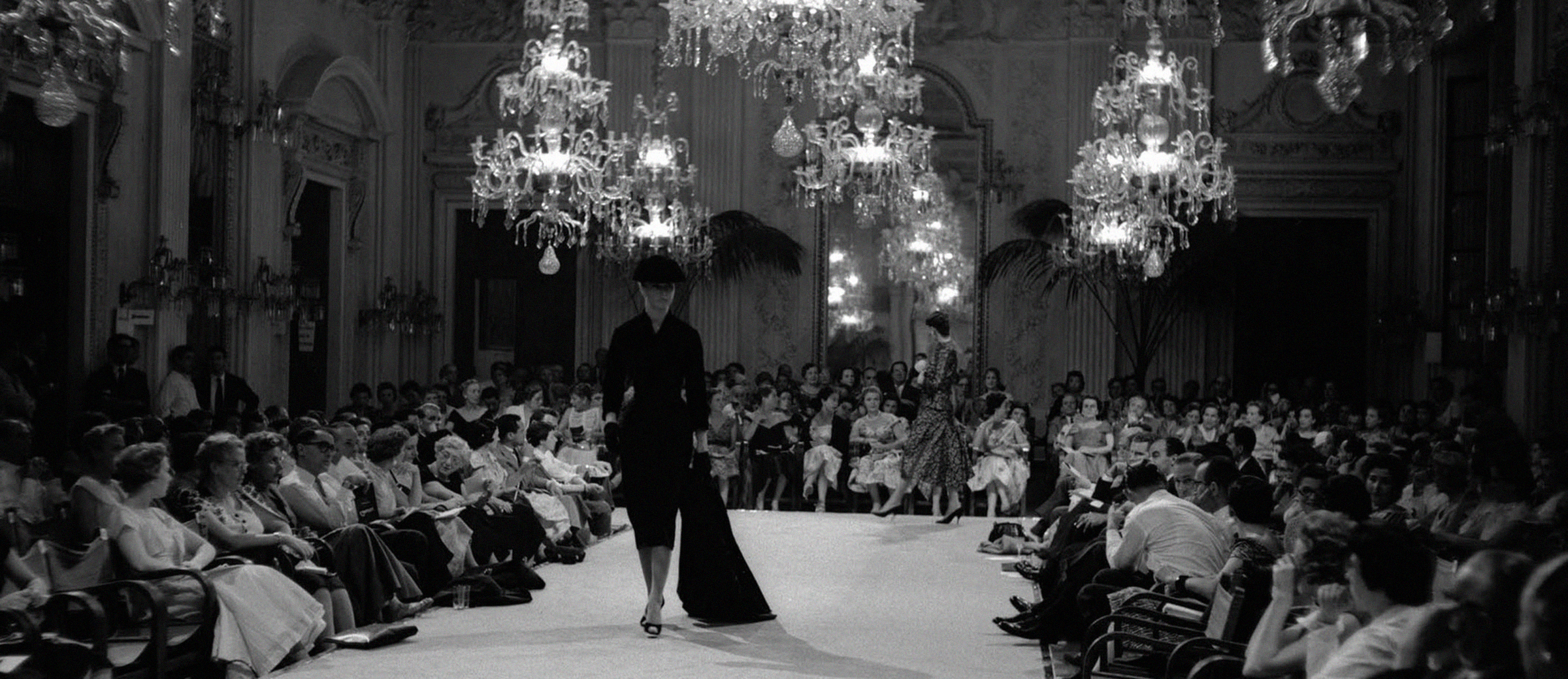
Villa Torrigiani, Armani’s Volkswagen and Richard Gere in front of a bed full of jackets
By Anja Zambelli Čolak
When someone says “Made in Italy”, what do you see?
You probably don’t see a factory. You see a suit that falls perfectly, a leather bag you’ll one day leave to your daughter, a red car, an espresso in a cup that’s heavier than it looks. Three words, and a whole film in your head.
The most interesting part is that this film hasn’t always existed. Someone had to shoot it.
A living room on Via de’ Serragli
In the early fifties, Paris dictated fashion, and Italy was a country of skilled dressmakers, small workshops and families who sewed for clients they knew. Giovanni Battista Giorgini, known to his friends as Bista, had spent years selling Italian craft products to American department stores. He had an idea: to show the Americans that Italy had its own fashion, not just good hands.
First he proposed a show in New York. The department store B. Altman turned it down.1 So he did it at home.
On 12 February 1951, in his house, Villa Torrigiani in Florence, he set up a runway.2 Around ten Italian houses, among them Sorelle Fontana, Emilio Pucci, Jole Veneziani and Emilio Schuberth, showed their collections to six guests from North America: buyers from Bergdorf Goodman, B. Altman and I. Magnin, and the editor of American Vogue.2 According to Giorgini, they came purely out of courtesy, on their way home from the Paris shows.
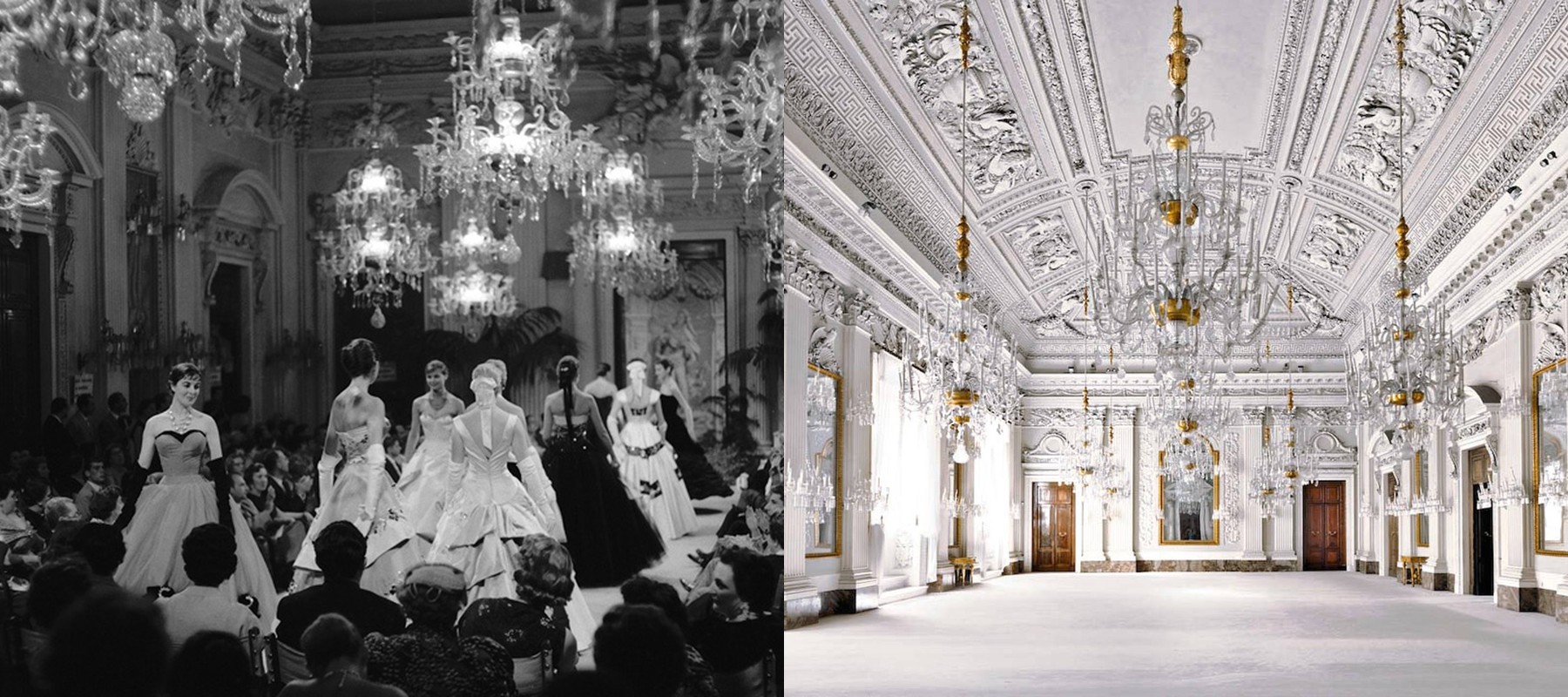
They left enchanted. When he organised the next show, Giorgini said, so many Americans came that he had to ask for a bigger space.3 By July 1952 the shows had moved to the Sala Bianca in Palazzo Pitti, a lavish white hall with eleven crystal chandeliers.4 They were held there for the next thirty years.
I love this story for one detail. None of it started with a national branding strategy. It started with a man who was convinced that what was being made around him was good enough to show the world. And who, when New York said no, opened the doors of his own home.
A brand no single person built
If “Made in Italy” were a film, the closing credits would be full of names.
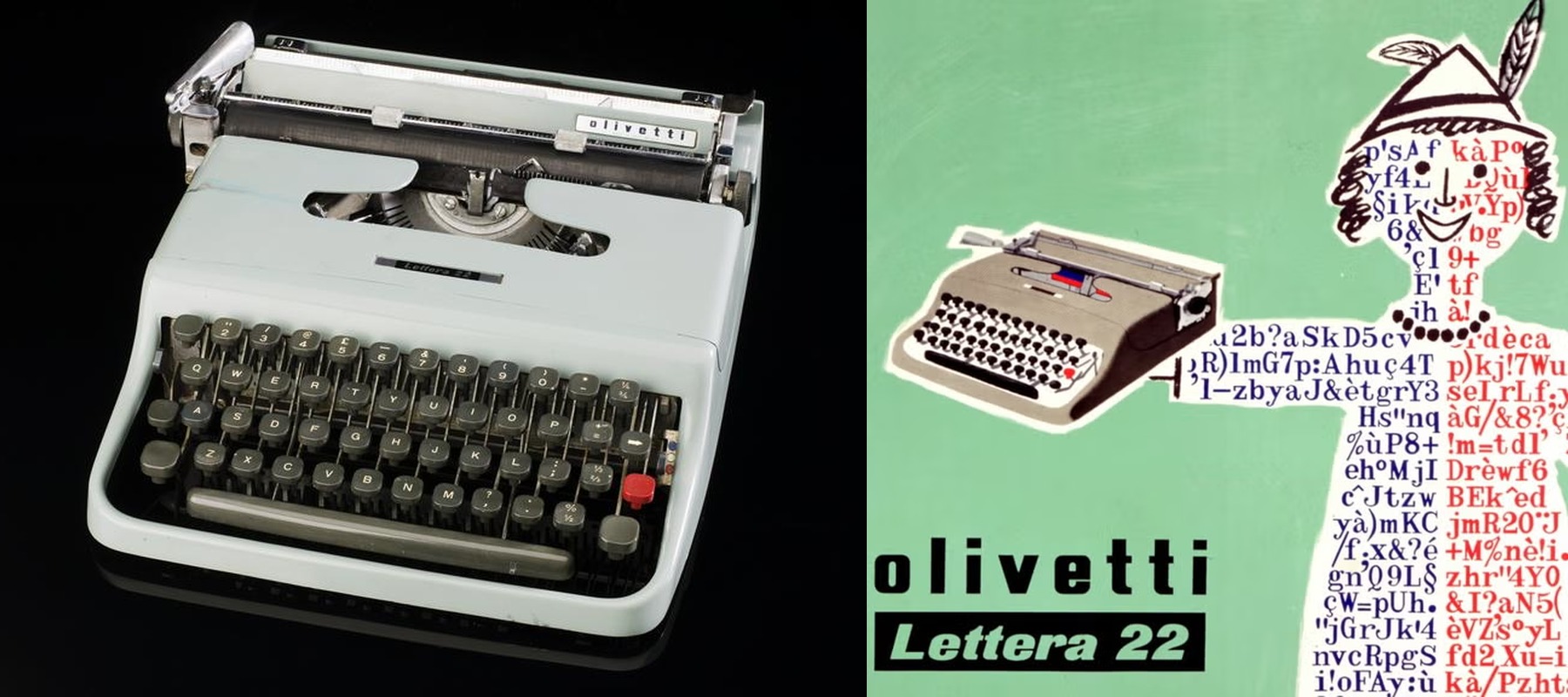
In 1954, the Milan department store La Rinascente launched the Compasso d’Oro, an award for industrial design, based on an idea by Gio Ponti and Alberto Rosselli.5 Around 5,700 products were entered in the first edition.6 The catalogue of the first award included Olivetti’s Lettera 22 typewriter.7 Imagine that today: a department store founding a design award because it believes the country needs a standard of quality.
In the seventies, the centre of fashion moved from Florence and Rome to Milan. Giorgio Armani and his partner Sergio Galeotti sold a Volkswagen to raise money for their own company. Armani later admitted they had no idea what they were doing.8 In its first year, 1975, the company sold roughly 14,000 dollars’ worth of clothes.9
The scene on the bed
Then Hollywood stepped into the story, entirely by chance.
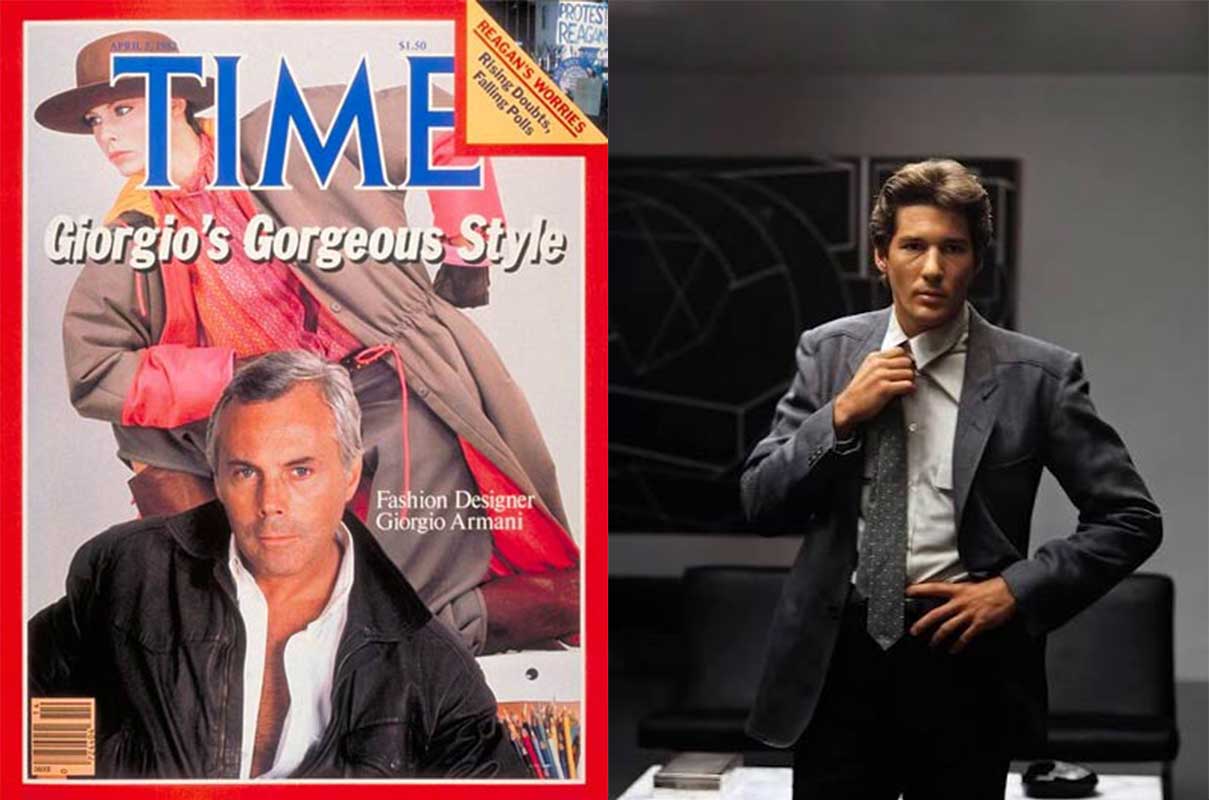
In the late seventies, director Paul Schrader was preparing American Gigolo. The lead was meant to be John Travolta, then the biggest star around after Grease. His manager suggested Travolta wear Armani, convinced the Milanese designer was about to become big.10 Travolta was even photographed in Armani for a two-page Variety ad announcing his role.11
Then he dropped out to make Urban Cowboy. The role went to Richard Gere, two weeks before shooting began.12 There was just one problem: Gere was shorter and built differently from Travolta, so the wardrobe didn’t fit. Armani’s team had to make a new one on the fly.13
The film opened on 1 February 1980.11 Few people remember the plot today. Everyone remembers one scene: Gere, bare-chested, laying jackets, shirts and ties out on the bed, matching colours and textures, changing his mind and humming along to the music. Schrader later said that, for him, the clothes and the character were one and the same.14
For Armani, it was like getting his own commercial in cinemas across America. According to figures cited by fashion historians, sales grew from 90,000 dollars in 1976 to 135 million dollars in 1981, the year after the film.9 A legend that persists to this day says Richard Gere never pays for anything in Armani stores. No one has ever confirmed it, but no one has stopped retelling it either.9
On 5 April 1982, Armani was on the cover of Time, the first fashion designer on that cover since Christian Dior.15 Thirty-one years had passed between Giorgini’s runway in his living room and that cover.
A promise that is repeated
Buyers, journalists, a mayor who lent a hall, a department store that founded an award, a director who wanted suits, a manager with good instincts, an actor who stepped in two weeks before shooting. And families who worked to the same standard for decades. None of them built “Made in Italy” alone. Together, they repeated the same promise long enough for the world to believe it.
And they didn’t stop. At the end of 2023, Italy passed a law to protect and promote “Made in Italy” and declared 15 April, Leonardo da Vinci’s birthday, National Made in Italy Day.16 Seventy years after Villa Torrigiani, they are still investing in the story.
For me, that is the best definition of a brand I know. A brand is not a logo or a slogan. It is a promise that many people, each in their own place, repeat long enough and consistently enough that others start retelling it for you.
Croatia has yet to build its own “Made in”. As a whole, not as a souvenir.
At the beginning I wrote that someone had to shoot this film. It turns out one of its most important shots really was filmed. In Los Angeles, with an actor who stepped in at the last minute, in suits that had to be re-tailored overnight.
Research background: Giovanni Battista Giorgini and the first Italian high fashion shows (Polimoda; Archivio Giorgini; ZoneModa Journal, University of Bologna, 2021); Lucia Savi, A New History of “Made in Italy”, Bloomsbury, 2023; Archivio la Rinascente and Compasso d’Oro; AFI Catalog, American Gigolo (1980); Time, 5 April 1982; Legge 27 dicembre 2023, n. 206.
Cover photo: fashion show in the Sala Bianca, Palazzo Pitti, in the fifties
Sources
- Polimoda, “G.B. Giorgini and the Origins of Made in Italy”
- Giovanni Battista Giorgini · nss magazine, history of Milan Fashion Week
- Il Giorno, “C’era una volta il défilé: 70 anni fa la prima sfilata”
- Visit Italy, “L’affascinante storia della moda italiana”
- Archivio la Rinascente, “The Golden Years 1954–1957”
- Compasso d’Oro
- Archivio la Rinascente, Compasso d’Oro catalogue
- Hello!, “Giorgio Armani – Biography”
- Haley Mlotek, “Armani in America”, Bunk History
- Far Out, “How Richard Gere’s American Gigolo put Giorgio Armani on the map”
- AFI Catalog, American Gigolo (1980)
- American Gigolo
- TMZ, interview with Paul Schrader, 2025
- Grailed, “American Gigolo and the Rise of the Armani Generation”
- Time, 5 April 1982 · Business History Conference, “Suiting Up for Easy Street”
- MIMIT, Giornata nazionale del Made in Italy